
Living in a “Half World”: Understanding Hemineglect After Stroke or Brain Injury
written by RIZWANA BEGUM , MPT ( Neurology ) .
The Half-World Analogy
Imagine your entire world just… shrank to half its size. Not because you can’t see — your eyes work perfectly fine — but because your brain simply stopped paying attention to one whole side of everything around you.
That’s hemineglect. It’s not a vision problem — it’s an attention problem.

The Dinner Plate Example: Picture an individual sitting down to a full plate of food. They eat everything on the right side — and leave the left side completely untouched. Not because they don’t like it. Not because they can’t see it. Their brain simply never directed their attention there. Ask them if they’re done, and they’ll genuinely believe they finished the whole plate.
This is what makes hemineglect so tricky — for families, and even for the individual themselves. Nothing about the eyes is broken. The world just quietly went missing on one side.
What It Is
The brain ignores one side.
After a stroke or brain injury (most often affecting the right side of the brain), the brain stops registering information from the left side of space — even though the eyes, optic nerves, and visual pathways are completely intact. The person can see it. They just don’t notice it.
🚩 Red Flags (Signs to Watch For)
Consistently turning the head/body away from one side
Eating food from only one side of the plate
Bumping into doorframes or furniture on one side
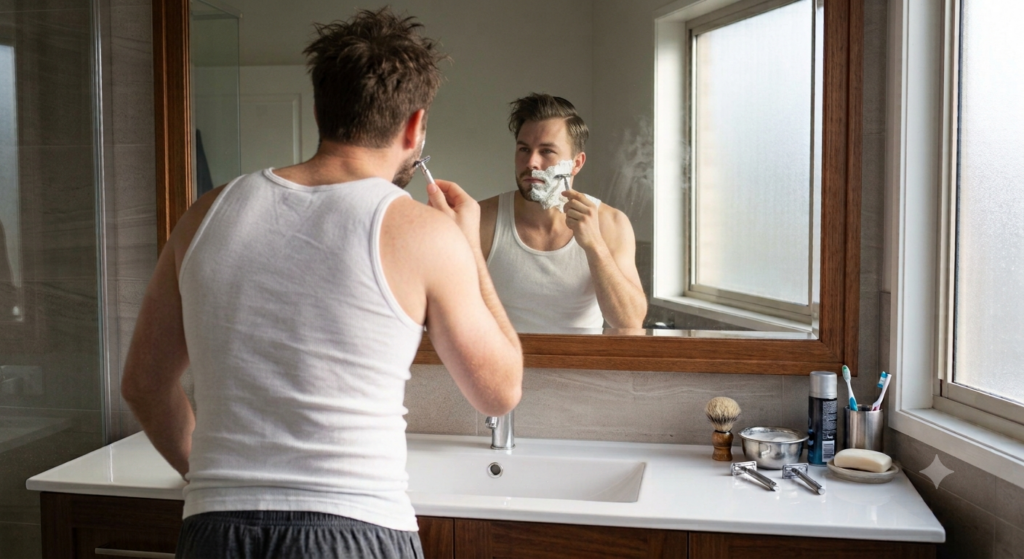
Shaving, applying makeup, or grooming only half the face
Reading only half a page, or missing the start of a sentence
Not responding to people approaching from one side
Drawings or clock-copying that are crowded onto one half of the page
What Do I Do? (For Caregivers)
If you’re caring for someone with hemineglect, a few simple habits make a real difference:
Approach from the loud side. Speak to and approach the person from their aware (non-neglected) side first, then gradually encourage them to turn toward the neglected side.
- Encourage forced use. Gently prompt movement and attention toward the neglected side during daily tasks — reaching, turning, scanning — rather than always compensating for them.
- Use visual cues. A colored line down the edge of a page, a bright sticker on the neglected side of objects, or consistent placement of items can help redirect attention.
Management
Effective management combines:
Accurate diagnosis (ruling out a pure vision problem)
Home and environment adjustments for safety
Structured therapy to retrain attention
Consistent caregiver involvement using the strategies above
The Physiotherapist’s (and Rehab Team’s) Role
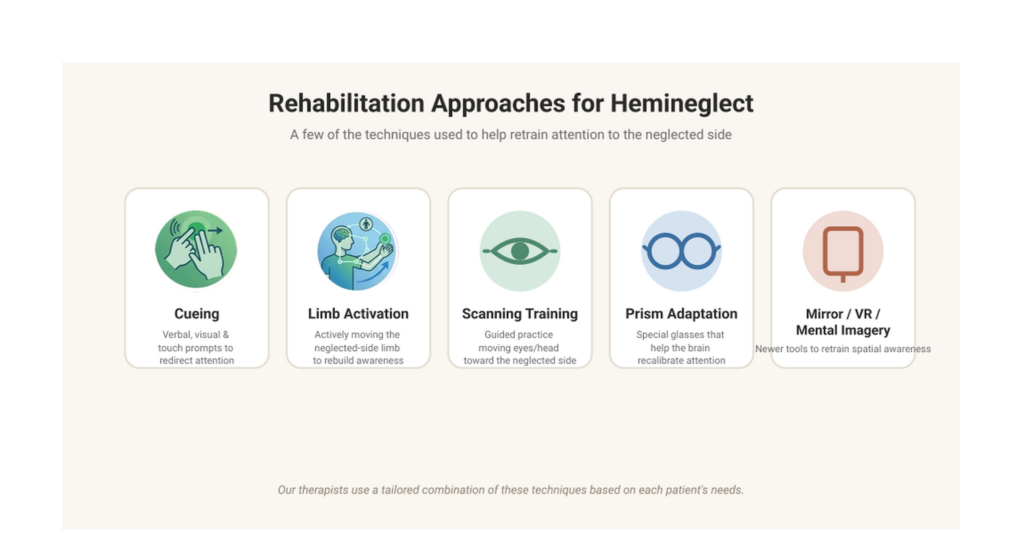
There are several clinical sub-types of neglect that your therapist may assess for – this helps tailor your specific treatment plan. Recovery from hemineglect isn’t passive — it takes structured, repeated practice. Our therapy team works with patients on
-
-
- Visual scanning training — guided exercises to actively scan and search the neglected side, using targets, tasks, and real-world activities like reading or walking through a room
-
- Cueing strategies — verbal prompts, touch, and visual markers to redirect attention during everyday movement and tasks
-
- Limb activation therapy — encouraging active use of the affected-side arm or leg to help “wake up” awareness of that side
-
- Prism adaptation therapy — special prism glasses that shift the visual field, helping the brain recalibrate spatial attention over time
-
- Mirror therapy, virtual reality & mental imagery — newer tools that help retrain the brain’s spatial awareness in engaging ways
- Environmental and safety setup — adjusting the home environment (lighting, furniture placement, hazard removal) so the neglected side is safer to navigate during recovery
-
Recovery looks different for everyone, but with consistent therapy and caregiver support, many patients regain meaningful independence and awareness over time.
ABOUT THE AUTHOR

RIZWANA BEGUM
Rizwana Begum, MPT ( Neurology) , is a senior physiotherapist at pain and stroke rehab centre with over 5 years of hands on experience in neurorehabilitation . She’s worked across ICU, inpatient and outpatient neurocare and she is passionate about helping patients and families understand recovery every step of the way .